Serving Chicago and Cook County
Termite treatment in Chicago, IL: mud tubes mean call today
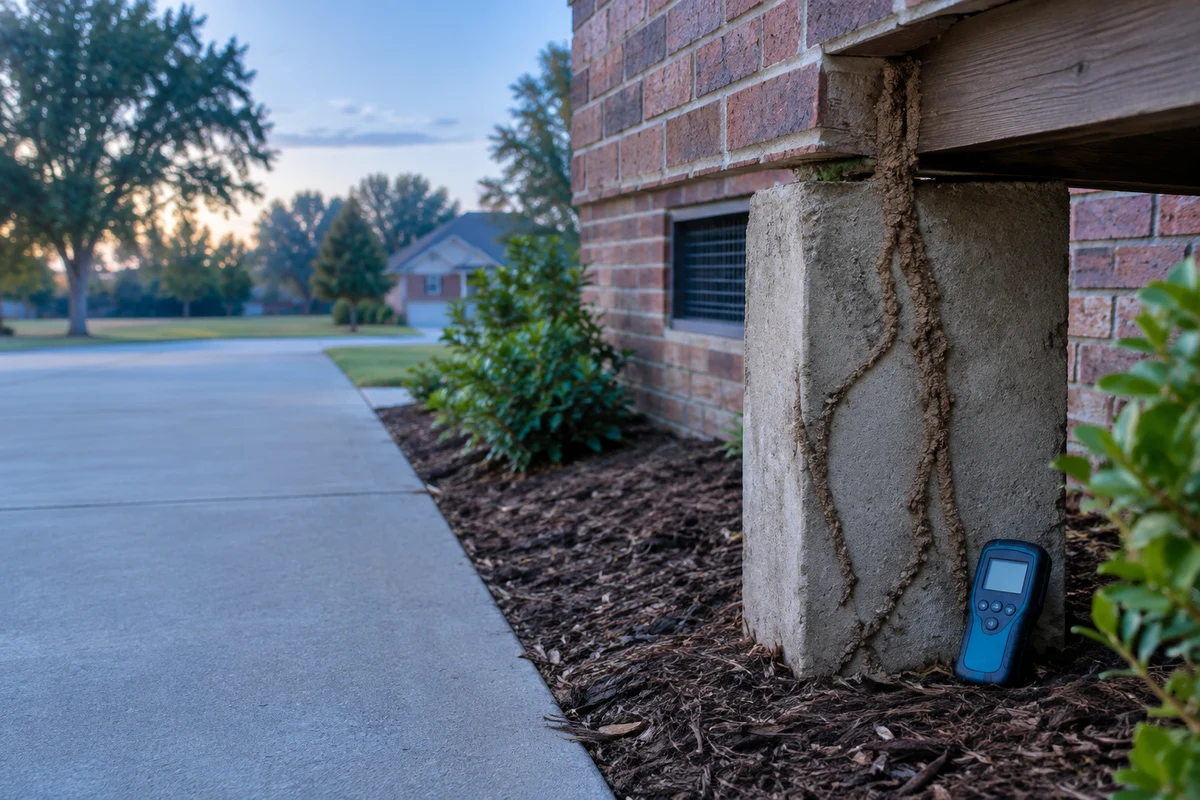
Mud tubes on the foundation, sagging baseboards, or wings on a windowsill. Call and get connected to a licensed provider who inspects and quotes in writing.
Available 24/7
Calling connects you with an independent pest control provider serving Chicago, not Chicago Bug Busters directly. This is a referral service paid by providers for the introduction, and the provider you reach sets the price and scope of the job.
What people notice first
Termites don't announce themselves loudly. Here's the thing: by the time you spot obvious damage, they've usually been at it for a while. These are the signs I tell people not to ignore in Chicago's older brick two-flats and bungalows.
- Mud tubes on the foundation or a pier subterranean termites moving between soil and wood Call today
- Hollow-sounding or blistered baseboards galleries eaten inside the wood This week
- Piles of shed wings on a sill a swarm already came from a nearby colony This week
- Doors and windows that suddenly stick wood swelling from moisture and damage behind the trim This week
- Pinholes in drywall with frass beneath drywood or subterranean activity inside the wall Call today
Timing through the year
Chicago swarms mostly show up May to June, right when the ground warms and winged termites go looking for a new spot to start a colony. But crawl spaces and old foundations stay vulnerable year-round, even through the cold months. The colony itself lives underground, where it doesn't freeze.
Typical prices, not quotes
Termite jobs vary a lot depending on the treatment method and how much foundation you're dealing with. A small bait station setup on a bungalow costs way less than a full liquid barrier around a big greystone with a finished basement.
| Job | Low | High | What moves it | Scope |
|---|---|---|---|---|
| Bait system installation | $800 | $1,500 | number of stations and monitoring visits | perimeter bait stations, ongoing checks |
| Liquid barrier treatment | $1,200 | $2,200 | linear feet of foundation trenched and treated | full foundation perimeter, crawl space included |
| Spot treatment, limited area | $800 | $1,300 | size of active colony area | localized wood and soil treatment |
| Full treatment plus repair coordination | $1,800 | $2,500 | damage repair layered on top of treatment | treatment plus referral for structural fixes |
These are typical ranges, not a quote. The provider inspects your specific foundation type, slab, crawl space, or full basement, before pricing the job.
Pricing reviewed Pricing reviewed September 2026
Why two quotes differ
- liquid barrier or a bait system
- linear feet of foundation
- crawl space or slab construction
- damage repair on top of treatment
From your call to a written quote
- Call and describe what you're seeing
Mud tubes, wings, sticking doors, whatever it is. The person who answers gets your basic details and location.
- A licensed provider inspects
They walk the foundation, crawl space, or basement and identify the extent of activity before naming a price.
- You get a written quote
No pressure to sign on the spot. The provider explains bait versus liquid treatment and why.
- Treatment and follow-up
Depending on the method, expect an install visit plus scheduled monitoring checks after.
Local conditions that shape the work
Chicago's housing stock is a big reason termite calls here look different than in other cities. There's brick and masonry two-flats, three-flats, and greystones going back to the post-fire rebuilding of the 1870s and 1880s, plus a huge wave of bungalows from the 1910s through the 1930s. Masonry exteriors don't stop termites, though. Wood framing, floor joists, sills, and trim inside those walls are still fair game. The clay-heavy soil around here holds moisture in ways that keep subterranean colonies comfortable close to the foundation.
Here's the thing about the soil. Chicago sits on glacial till clay and clay loam left behind from Lake Chicago and Wisconsin-era glaciation, and it drains poorly. Add a generally high water table in a lot of neighborhoods, plus older basements with rubble stone or brick foundations, and you get conditions where moisture collects right where termites want to be. I've crawled into more than one Bridgeport and Bronzeville basement where the dampness alone told me what I'd find before I even pulled out the flashlight.
Newer high-rise condo construction downtown is a different story. Mostly concrete and steel. Lower risk. But the wood-frame bungalows and courtyard apartment buildings across neighborhoods like Garibaldi Square, Canalport, and South Brighton carry more exposure, especially where old additions or porches tie wood framing close to grade.
Good to know
How urgent is a termite swarm in a Chicago home?
If you're seeing shed wings on a sill in May or June, that's usually this week territory, not an emergency. Still, don't let it sit for months. The swarm means a colony nearby has matured enough to reproduce, and it's worth getting an inspection before next season.
Does homeowners insurance cover termite damage in Illinois?
Generally, no. Termite damage is typically treated as a maintenance issue, not a sudden covered loss, so most standard homeowner policies exclude it. That's part of why catching mud tubes early on a Chicago two-flat or bungalow matters, treatment costs a lot less than repairs do.
Can termites survive a Chicago winter?
The colony lives underground below the frost line, so yes, it survives just fine. Activity you see indoors may slow in the cold months, but the underground colony doesn't die off. That's why crawl space and foundation checks still matter even outside swarm season.
Is bait or liquid treatment better for an older Chicago building?
Depends on the foundation and how much perimeter access there is. Bait systems work well with less digging around tight urban lots, while liquid barriers suit full trenching around a standalone foundation. A provider who inspects your setup will recommend one over the other.
What if I rent my unit in Chicago and see termite signs?
Under Chicago's landlord-tenant rules, property owners generally handle pest issues in rental units. Flag it to your landlord in writing right away, and keep photos of any mud tubes or damage as documentation while treatment gets arranged.
Who you are dealing with
- Who answers
- An independent licensed pest control provider serving the Chicago area answers the call.
- Who does the work
- That same provider's technician inspects the property and handles any treatment, not Chicago Bug Busters.
- Who pays us
- The provider sets the price directly with you after inspecting the foundation or crawl space.
Useful to know before you call
- photos of mud tubes, wings, or damaged wood
- your address and closest cross streets
- whether the home has a crawl space, slab, or basement